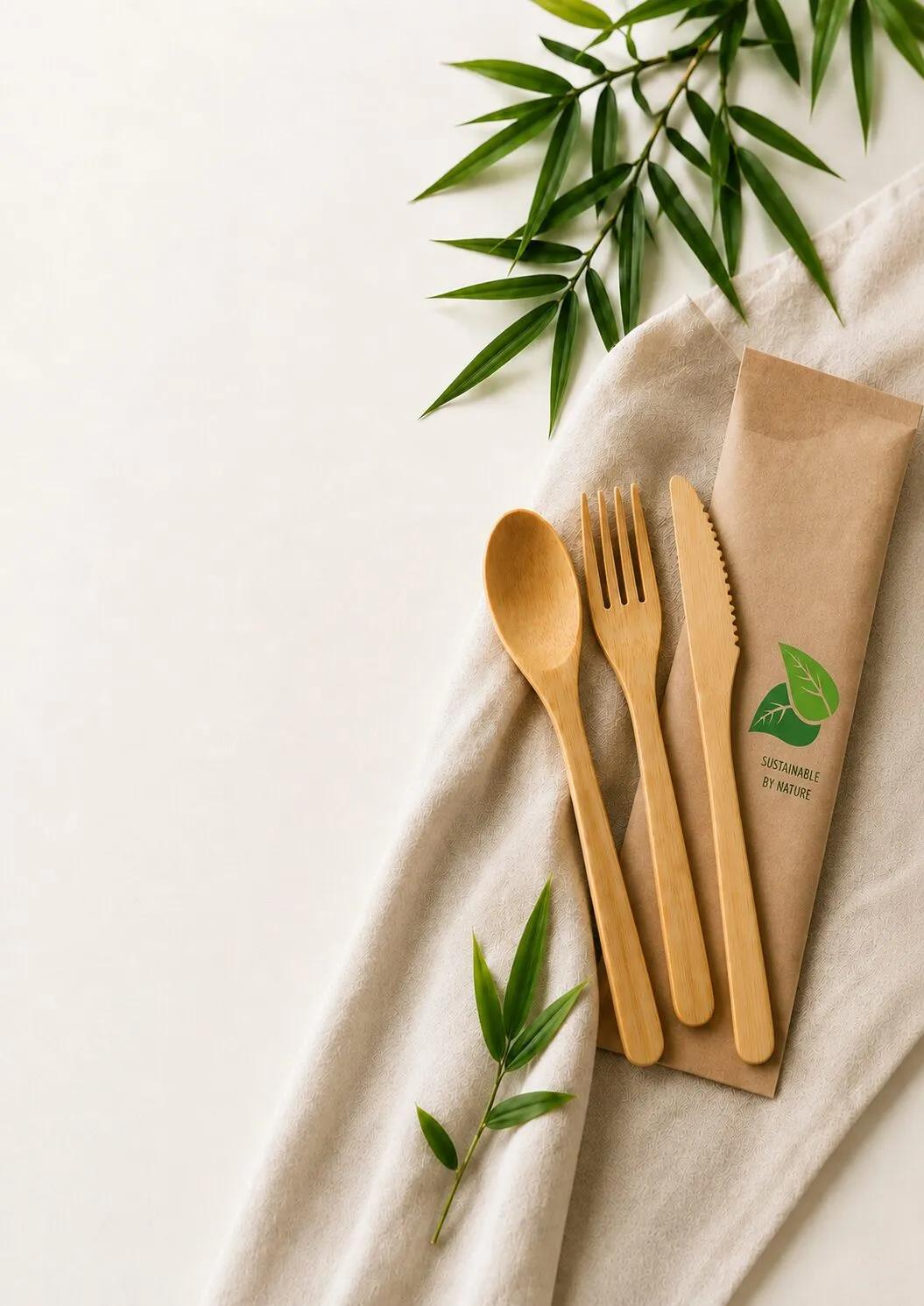
Not all 'eco' cutlery is equal.
Much of the 'bamboo' or 'eco wooden' cutlery sold in South Africa is actually birchwood, and most buyers cannot tell the difference. Here is what separates them, and why it matters to your canteen and your ESG story.
Bamboo vs birchwood cutlery
Both look natural at a glance. They are very different materials.
| Topic | Bamboo | Birchwood | Why it matters to a buyer |
|---|---|---|---|
| Growth and harvest | A rapidly renewable grass, harvestable in about 3 to 5 years; regrows from its roots without replanting. | Timber from trees that take roughly 15 to 25 years to mature; harvested by felling and replanting. | Bamboo is the genuinely renewable choice. |
| Strength and safety | Dense fibre, strong, low splinter risk. | Rigid but can splinter when it snaps. | Safer, better dining experience. |
| Finish and mouthfeel | Naturally smooth. | Can feel dry or papery and absorb liquid. | Higher staff satisfaction. |
| Land impact | A grass that helps stabilise soil. | Draws on commercial forestry. | Stronger biodiversity story in ESG reporting. |
Growth periods are typical ranges and vary by species and region.
How to tell if you are buying real bamboo
- Ask the supplier for the material specification. It should name bamboo as the material, in writing, on the specification sheet or invoice.
- Check the colour and grain. Bamboo shows fine, parallel fibres and a warm golden tone. Birch is pale with an even wood grain.
- Ask where it is made. Who manufactures it, in which country, and can you visit or see the production line?
- Test it in use. Snap test a sample and try it with a hot, saucy meal. Look for splintering, softening and mouthfeel.

If the specification sheet says birch, it is not bamboo, however it is marketed.
Read: Birchwood vs bamboo cutlery: why your canteen may be buying the wrong 'eco' disposable
Frequently asked questions
Is birchwood cutlery the same as bamboo cutlery?
No. Birchwood cutlery is made from birch trees, a hardwood timber. Bamboo is a grass. Both are sold as "eco" or "wooden" cutlery, and the two are often confused or mislabelled.
How can I tell bamboo cutlery from birchwood?
Ask the supplier for the written material specification, look at the colour and grain (bamboo shows fine parallel fibres and nodes; birch has an even, pale wood grain) and ask where and by whom it is made.
Can I compare your bamboo cutlery with what we use now?
Yes. Order a sample box and test our bamboo spoons, forks, knives and packaged sets side by side with your current cutlery.
Compare bamboo and birchwood side by side
Order a sample box of our bamboo cutlery and put it next to what your canteen uses today. Feel the difference before you decide.